
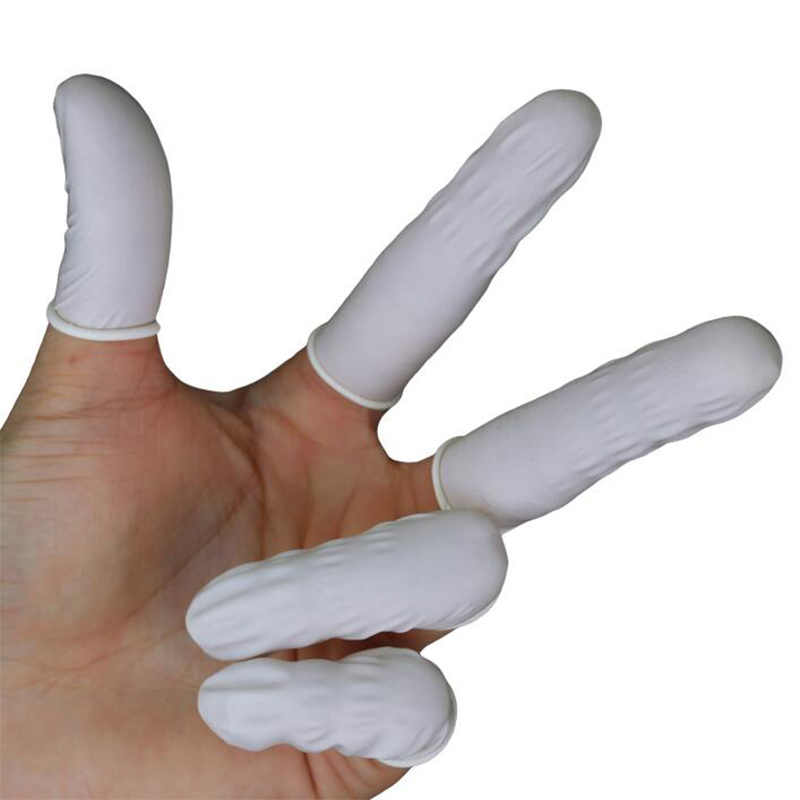
Anti-static Finger Cots
Product detail
Product Name: Anti-Static Finger Cots
Types:
Dust-Free & Powder-Free Finger Cots (White)
Anti-Static Finger Cots (Available in Yellow, Pink, & Black)
Packaging: Supplied in 500G bags, customizable packaging options are available to meet your specific requirements.
Performance Highlights: Crafted from natural, high-quality latex, our latex finger cover not only effectively prevents skin allergies but also safeguards fingertips from perspiration contamination, providing comprehensive protection. Its dust-free and anti-fingerprint properties make it the perfect choice for use in the semiconductor, microelectronics, LCD display, and other static-sensitive industries.


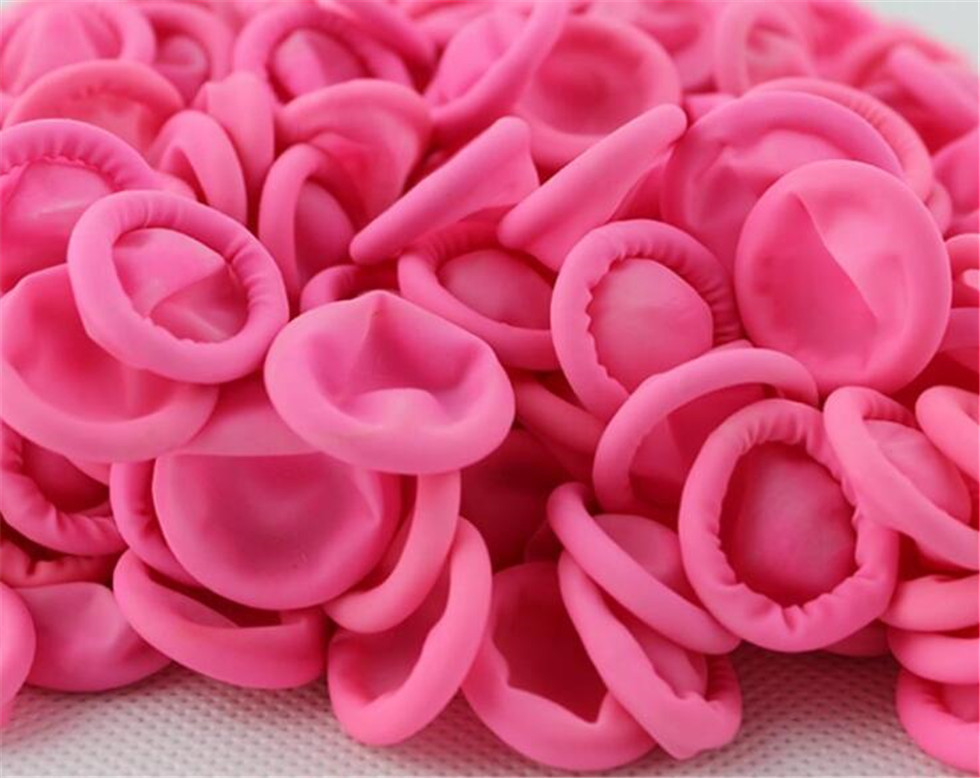
Technical sheet
| Material | rubber |
| Size | S M L |
| Color | Yellow, pink, black, white, blue, orange, beige |
| Surface resistance | 10^8Ω-10^10Ω. |
| Cot style | Rolled |
| Anti-static | yes |
| Powder free | yes |
| length | 65mm |
| width | 25mm |
| thickness | 0.22mm |
| 1. DIMENSION | ||||||
| NO. | Item Code | Size S | Size M | Size L | Size XL | Ref Standard |
| 1 | Average Weight(g) | 0.41±0.02 | 0.46±0.02 | 0.52±0.02 | 0.58±0.02 | ASTM D3772 |
| 2 | Width(mm) | 24±2 | 28±2 | 30±2 | 34.5±2.5 | |
| 3 | Thickness(mm) | 0.09±0.03 | ||||
| 4 | Length(mm) | 70±5 | ||||
| 2. PHYSICAL SPECIFICATION | ||||||
| NO. | Item Code | Spec | Ref Standard | |||
| 1 | Tensile Strength (Mpa) | ≥24 | ASTM D3772 | |||
| 2 | Elongation at Break(%) | ≥750 | ||||
| 3. ESD SPECIFICATION | ||||||
| NO. | Item Code | Spec | Ref Standard | |||
| 1 | Surface Resistivity(Ω/cm2) | 109-1011 | ANSI-STM11.11 ASTM D257 |
|||
| 2 | Decay Time(sec) | <3.0 | ||||
| 3 | Static Charge(v) | ≤50 | ||||
| 4 | Tribo-electric Charge(v) | 150 | ||||
| 4. CLEANLINESS SPECIFICATION | ||||||
| NO. | TEST(unit) | Spec | Ref Standard | |||
| 1 | Particle count (0.5-20µm;counts/cm2) |
≤1200 | IEST-RP-CC005.2 | |||
| 2 | [F+Cl+Br](µg/cm2) | <3.10 | ||||
| 3 | NO3(µg/cm2) | <0.14 | ||||
| 4 | SO4(µg/cm2) | <0.30 | ||||
| 5 | PO4(µg/cm2) | <0.03 | ||||
| 6 | Na(µg/cm2) | <0.85 | ||||
Specifications
Powder-Free & Dust-Free: Ensures a clean, particle-free working environment, ideal for sensitive applications.
Advanced Anti-Static: Neutralizes electrostatic charges, safeguarding delicate equipment from ESD damage.
Soft, Comfortable, & Highly Flexible: Soft, breathable materials offer superior fit and reduced fatigue during extended use.
Rolled Type for Effortless Donning: Rolled type design for effortless, seamless application.
Strong Tensile Strength & Durability: Strong tensile properties resist tearing and ensure long-lasting performance.
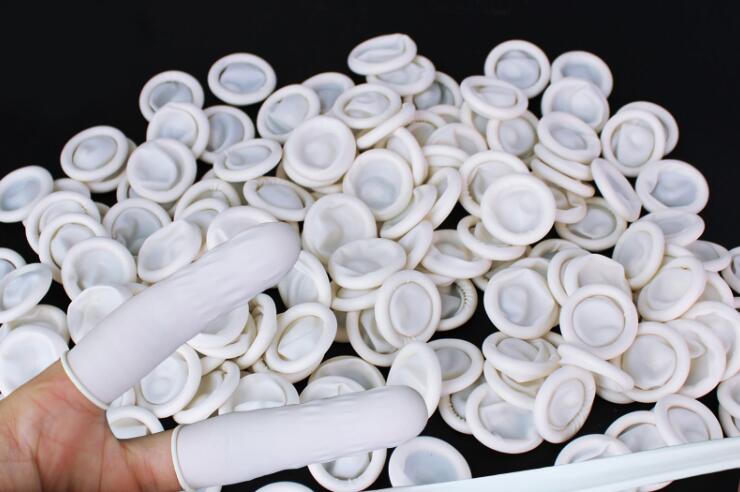
Essential Features of Finger Cots
Finger Protection: Ensures no harm to the skin, providing a safe barrier during product handling and preventing the transfer of fingerprints.
Ideal for Small Parts Handling: Finger cots are the perfect solution when a full glove is not necessary, allowing for precise manipulation of small components.
Cleanroom ESD-Safe Storage: To prolong shelf life and maintain optimal performance, Cleanroom ESD Finger Cots should be stored in a cool, dry location, away from direct sunlight.
Versatile Applications of Finger Cots
Electronics & Microelectronics Applications:In the field of electronics and microelectronics, finger cots are indispensable for handling sensitive components like semiconductors and optoelectronics. They protect against electrostatic discharge (ESD), ensuring the integrity of delicate electronic devices during manufacturing, assembly, and inspection.
LCD & PCB Manufacturing:For LCD and PCB products, finger cots provide a clean and ESD-safe environment during production and handling. They prevent contamination and ensure that fingerprints or other impurities do not compromise the quality of the final product.
Medical & Pharmaceutical Industries:In medical facilities, pharmaceutical, and biotechnology industries, finger cots offer a sterile and non-contaminating solution for handling delicate instruments, samples, and medications. They protect both the user and the product, reducing the risk of cross-contamination and ensuring the highest standards of hygiene.
Laboratory Use:Laboratories require precision and cleanliness, making finger cots an essential tool. They are used in various scientific applications, from chemistry and biology to physics and engineering, to ensure that samples and equipment are handled with care and without contamination.
Precision Assembly:During precision assembly, finger cots enable operators to work with small parts and components with greater accuracy and control. They reduce the risk of damaging delicate structures and ensure that the final product meets strict quality standards.
Manufacturing Inspection:In manufacturing, finger cots are used during inspection processes to protect the product from fingerprints, oils, and other contaminants. They allow inspectors to examine products closely without compromising their integrity or cleanliness.
Printing & Photographic Operations: In printing and photographic operations, finger cots prevent fingerprints and smudges from ruining the final product. They ensure that prints, photographs, and other media remain clean and free of imperfections.
Beauty Industry: In the beauty industry, finger cots are used during various treatments and procedures to protect the client's skin from contamination and ensure a hygienic environment. They are also used to apply creams, lotions, and other products with precision and control.
Structural Applications: While finger cots are primarily known for their use in handling delicate and static-sensitive objects, they can also find application in structural settings where precision and cleanliness are crucial. For example, they may be used in the assembly of precision machinery or equipment where even the slightest contamination or damage can compromise performance.